
Adhesives for Semiconductors: Bonding and Thermal Management
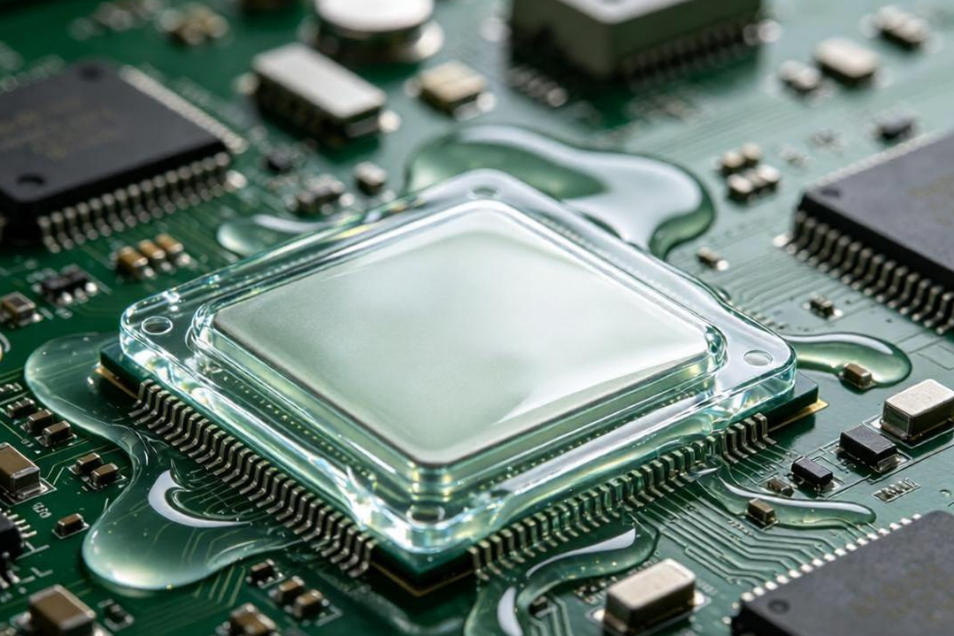
PUCONS offers specialty adhesives engineered for semiconductor assembly and adhesives for electronics manufacturing. These include high-purity epoxy adhesives for die bonding and silicone adhesives for thermal interfaces. In power modules and microelectronics, thermally conductive adhesives dissipate heat:silicone adhesive series, for instance, delivers 1.6–2.5 W/m·K thermal conductivity, bonding power ICs to heat spreaders. High-performance die-attach epoxies cure at moderate temperatures (e.g. 80 °C) to securely fix chips on substrates with minimal electrical resistance. Other PUCONS adhesives are tailored for applications such as potting and underfill: these epoxy and silicone compounds encapsulate circuit assemblies, locking out dust and moisture while damping vibration. As one source explains, epoxy potting “locks out dust and dampens vibration” and provides “high chemical and moisture resistance, safeguarding delicate electronics”.
Die Bonding: Rigid epoxies that attach semiconductor dies to leadframes or PCBs, offering high shear strength and thermal stability. PUCONS’s die-bond adhesives cure at low temperatures to protect sensitive chips while forming strong, low-resistance bonds.
Thermal Adhesives: High-thermal-conductivity silicones and epoxies that transfer heat from chips to heat sinks. These adhesives (2–5 W/m·K) maintain device temperatures and prevent hotspot failures.
Potting and Encapsulation: Epoxy and silicone compounds that fill cavities around components. These potting adhesives create an impermeable block around the circuitry, insulating against moisture and providing electrical isolation. PUCONS’s electrically insulating epoxies are often used in semiconductor modules and power electronics for robust protection.
Conductive Adhesives: Electrically conductive epoxies containing silver or graphite are used for grounding and EMI shielding in electronic packages. Such adhesives replace solder in applications where lower temperature curing or flexibility is needed, ensuring reliable current paths without short circuits.
Each category of adhesive is designed to meet semiconductor requirements: ultra-low ionic contamination, precise viscosity, clean processing and, where needed, flame resistance or regulatory compliance. By integrating these adhesives, semiconductor products gain higher yields and longer operational life.