
PUCONS’s Automotive Sealants
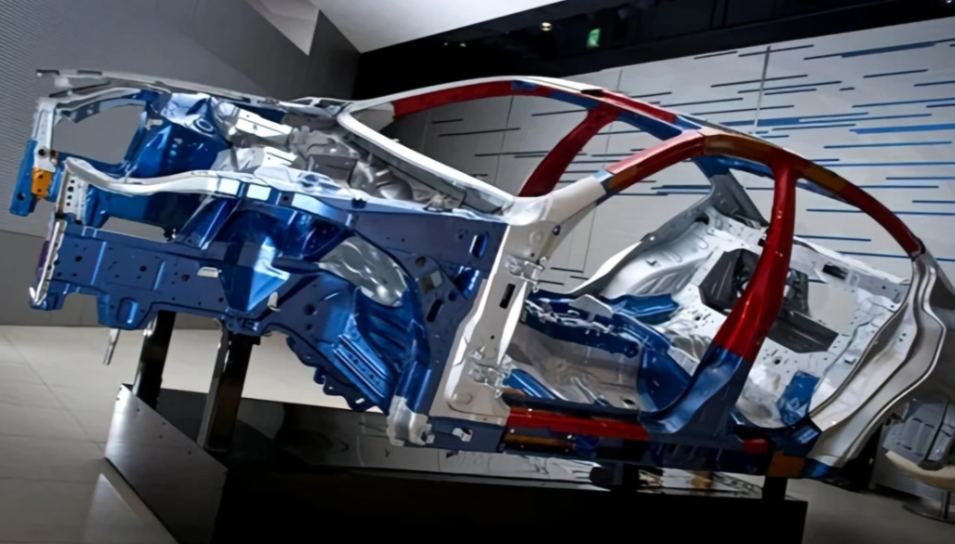
In traditional automotive manufacturing, both strength and flexibility are key. Consider a car assembly line: adhesives bond body panels, windshields and trim, while sealants block water around doors or engine covers. According to industry sources, “adhesives bond interior and exterior components” (dashboards, spoilers, lights) and “sealants protect electronics from moisture, wind and dirt. Even brand logos on cars stay on thanks to powerful adhesives.
PUCONS examples: One of PUCONS’s flagship products,PV136/PV118, is a two-part epoxy developed for this tough environment. After curing it “becomes a rubber-like elastic body with extremely high strength and high elongation. In practice, TB3953 can glue metal, plastic or glass parts together – for instance, mounting an on-board camera bracket or sealing a hydrogen tank – and still withstand engine heat (it holds ~5 MPa bond strength even at 150 °C) . That makes it ideal for modern powertrains (especially hybrids and fuel-cell vehicles) where parts of different materials must stay sealed under heat and vibration. In short, PU448 is a “high strength and high elongation” adhesive that bridges the usual gap between rigid glues and soft rubbers.
Another example is PU3150, a one-component sealant used in automotive electronics and battery packs. It’s a silyl-modified (silicone-like) RTV sealant that cures at room temperature. After setting, it “becomes a rubber-like elastic body excelling in heat resistance and chemical resistance”. In plain terms, PU3150 forms a resilient seal that won’t melt or crack under engine heat or coolant fumes. Because it’s non-silicone (tin-free) and contains no low-weight siloxanes that could “migrate” onto circuits, it’s safe around sensitive electronics. PUCONS promotes PU3150 for sealing ECU cases, battery enclosures and connectors in EVs, where it flexes with the housing and resists chemicals without corroding metal parts.
Why not use a generic glue? Many older automotive adhesives either require ovens or are rigid thermoplastics. For example, typical epoxies need heat-curing equipment and can’t flex much. PU3150 and PU448 cure at room temperature and are formulated for the gaps and movements of cars. Compared to ordinary silicone caulk, PU3150 has no volatile oils or D4-D10 cyclics that can damage circuits. And compared to a cheap flexible sealant, PU448 offers much higher load-bearing capacity. In other words, PUCONS tailors each product: some (like PU448) lean toward strength and stretch, while others (like PU3150) emphasize durability and flexibility without leakage.